
Choosing Construction Materials for Infrastructure: Performance, Testing and Long-Term Value
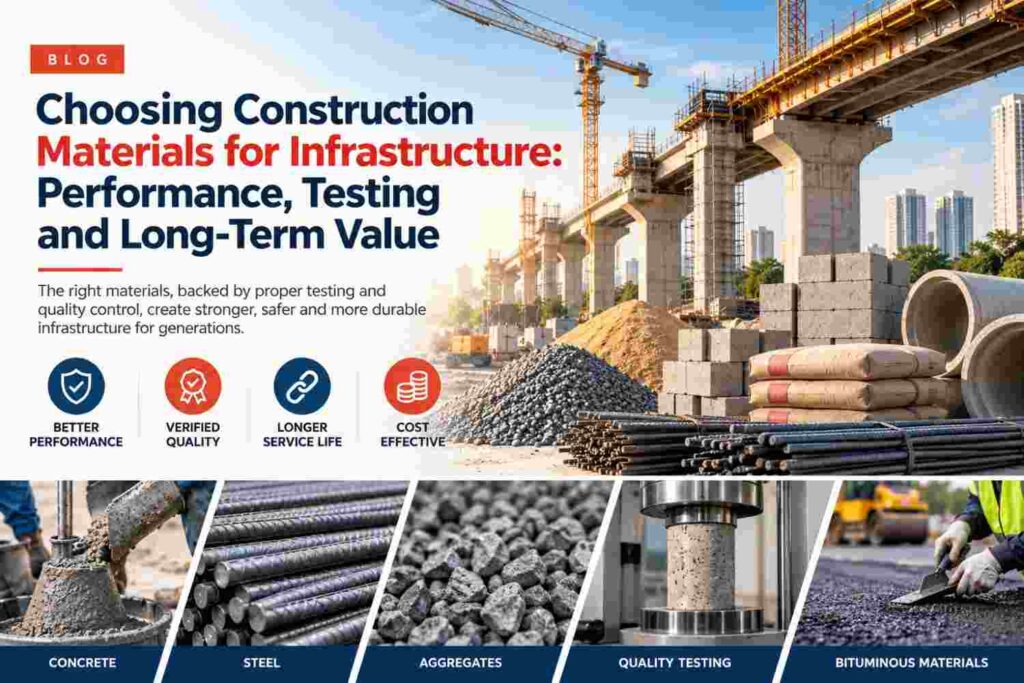
Construction materials influence strength, durability, safety, appearance and maintenance needs. Concrete, steel, aggregates, bituminous materials, masonry, tiles, pipes, coatings and waterproofing products serve different purposes and must suit their intended environment. The lowest purchase price does not necessarily produce the lowest project cost if a material is unsuitable, inconsistent or difficult to maintain. A disciplined […]
Renovation and Retrofitting of Public Buildings: When Repair Is Better Than Rebuilding
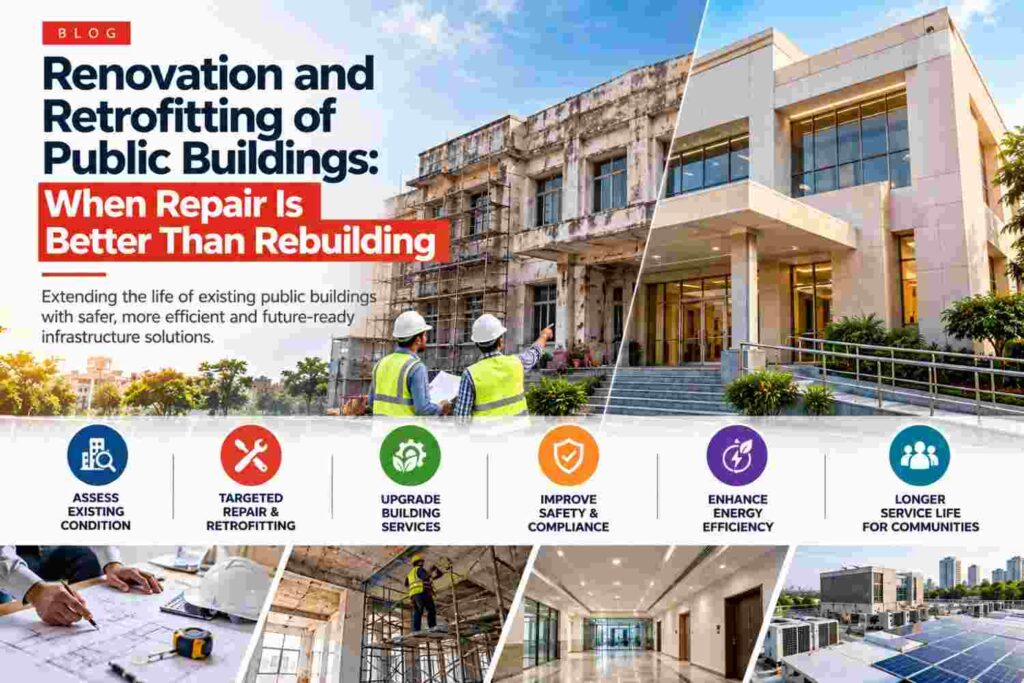
Public buildings age as materials weather, equipment wears out, occupancy needs change and regulations evolve. Refurbishment or retrofitting can sometimes extend useful life and improve performance without the cost and disruption of full replacement. In other cases, structural issues, functional limitations or safety concerns may make reconstruction more appropriate. The decision should be evidence-based. A […]
Smart Cities Need More Than Technology: The Importance of Integrated Infrastructure
Smart-city discussions often focus on sensors, digital dashboards and connected devices. Technology can improve services, but a city cannot function well if roads flood, utilities conflict, public spaces are inaccessible or maintenance responsibilities are unclear. Smart urban development is better understood as the integration of physical infrastructure, public services, data and long-term management. The goal […]
Road Safety During Construction: Protecting Workers, Drivers and Pedestrians
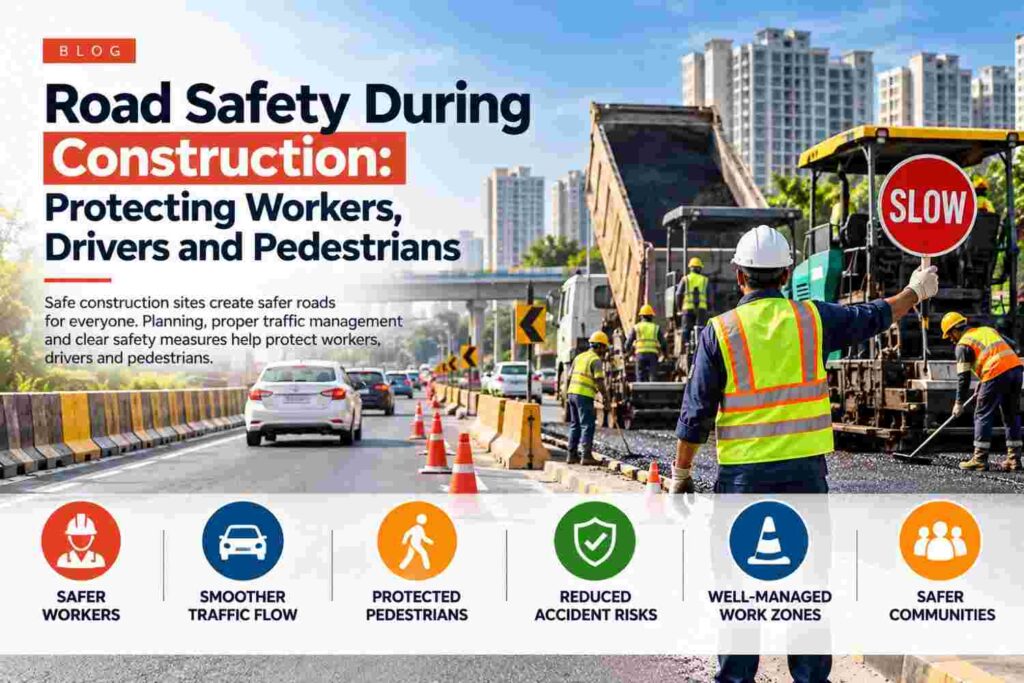
Road construction often takes place beside live traffic, homes, shops, schools and public transport. A planning failure can affect workers and members of the public. Safety must be built into execution methods, site layout, traffic arrangements and daily supervision. Controls depend on road type, speed, visibility, work duration, local authority requirements and the approved traffic-management […]
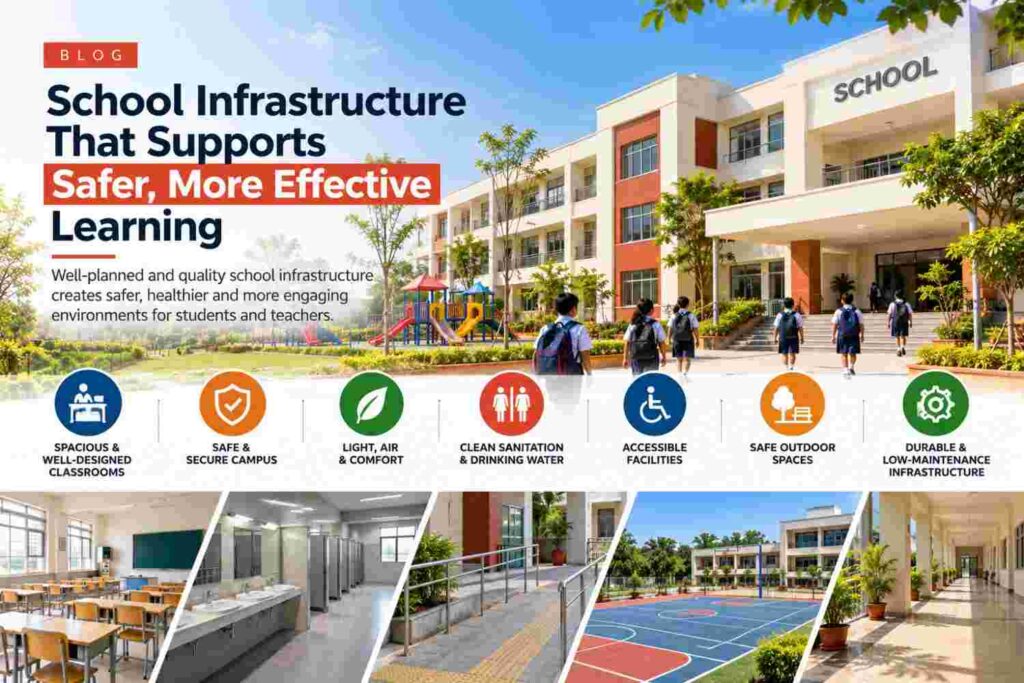
School Infrastructure That Supports Safer, More Effective Learning
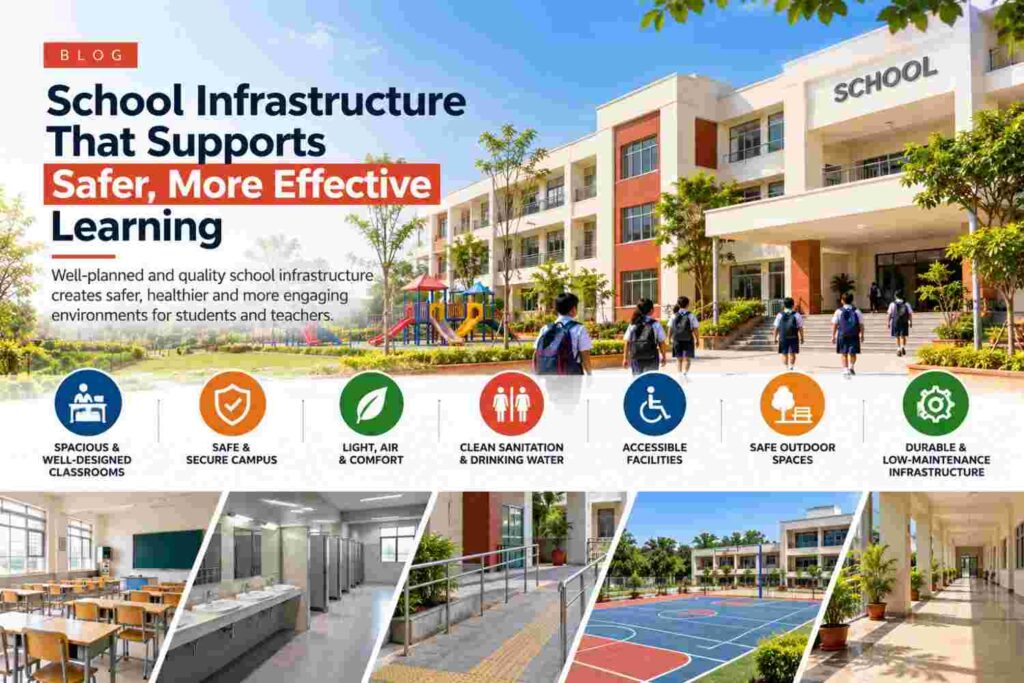
A school building is more than a collection of classrooms. It is a daily environment for students, teachers, support staff and visitors. Layout, ventilation, lighting, sanitation, circulation and maintenance influence whether learning spaces are comfortable, safe and usable. Public school projects must respond to local conditions, budgets, site constraints and community needs. Planning for these […]
From Planning to Handover: A Project Management Framework for Infrastructure Works
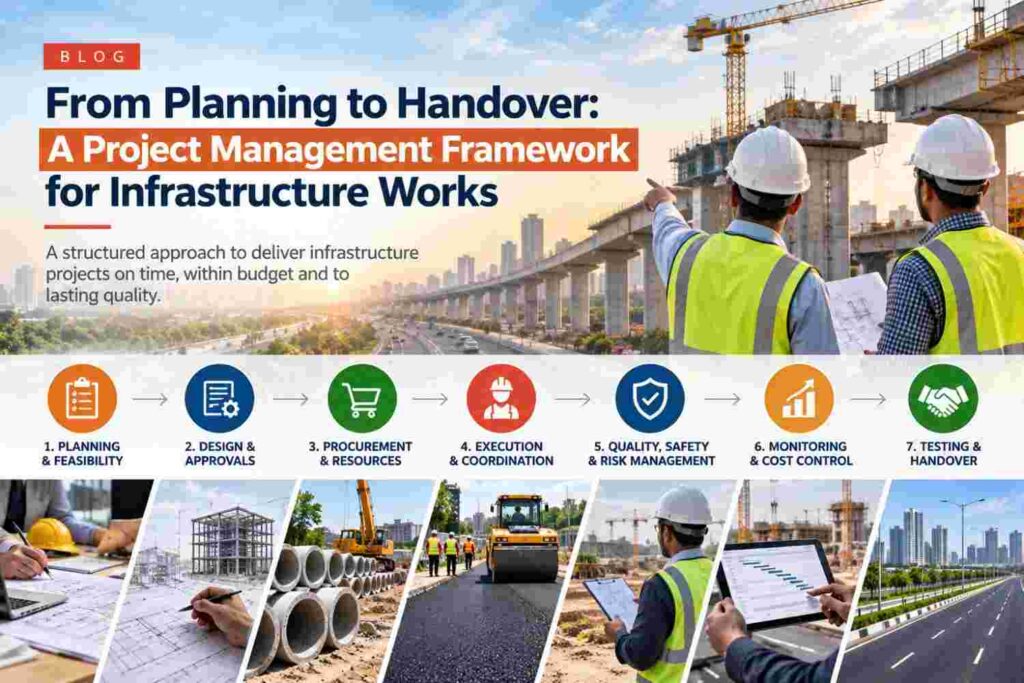
Infrastructure projects bring together designers, site teams, subcontractors, suppliers, authorities, utilities, local communities and future operators. A project may have sound engineering but still face delays if approvals are late, drawings conflict, materials are unavailable or responsibilities are unclear. Project management provides a structured way to coordinate scope, time, cost, quality, safety and communication. In […]
Sustainable Construction in India: Practical Steps for Infrastructure Projects
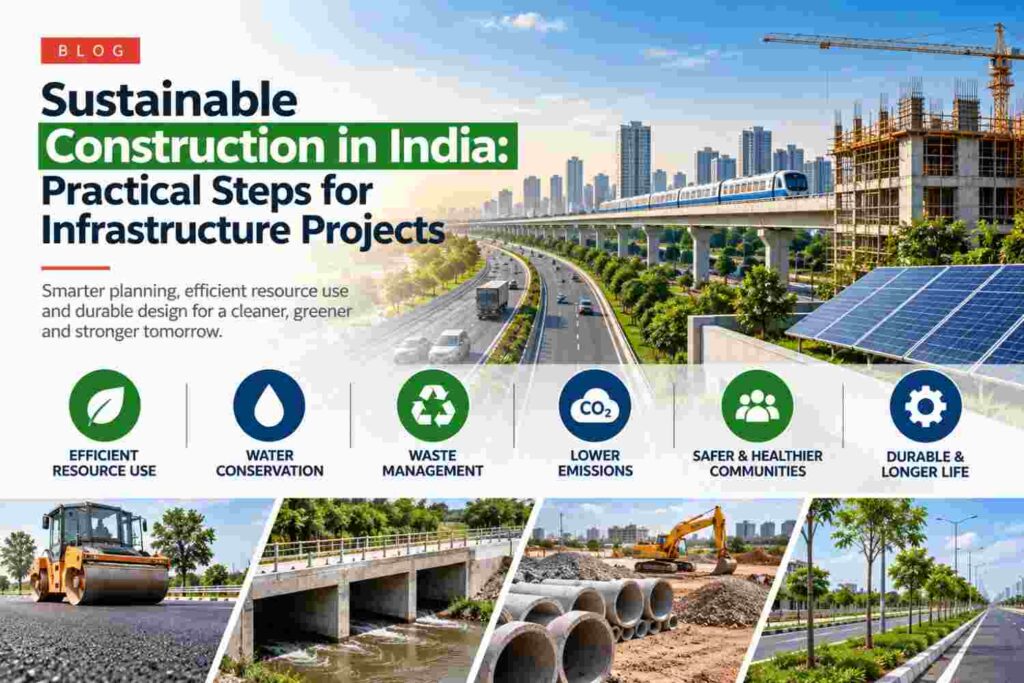
Sustainable construction is not limited to adding solar panels or planting trees around a completed project. It is an approach to planning, designing, building and operating infrastructure while considering resource use, environmental impacts, resilience and the needs of surrounding communities. Roads, buildings, drainage networks and industrial facilities use materials, energy, water, transport and land. Decisions […]
How Public Building Projects Can Deliver Better Value Over Their Entire Lifecycle
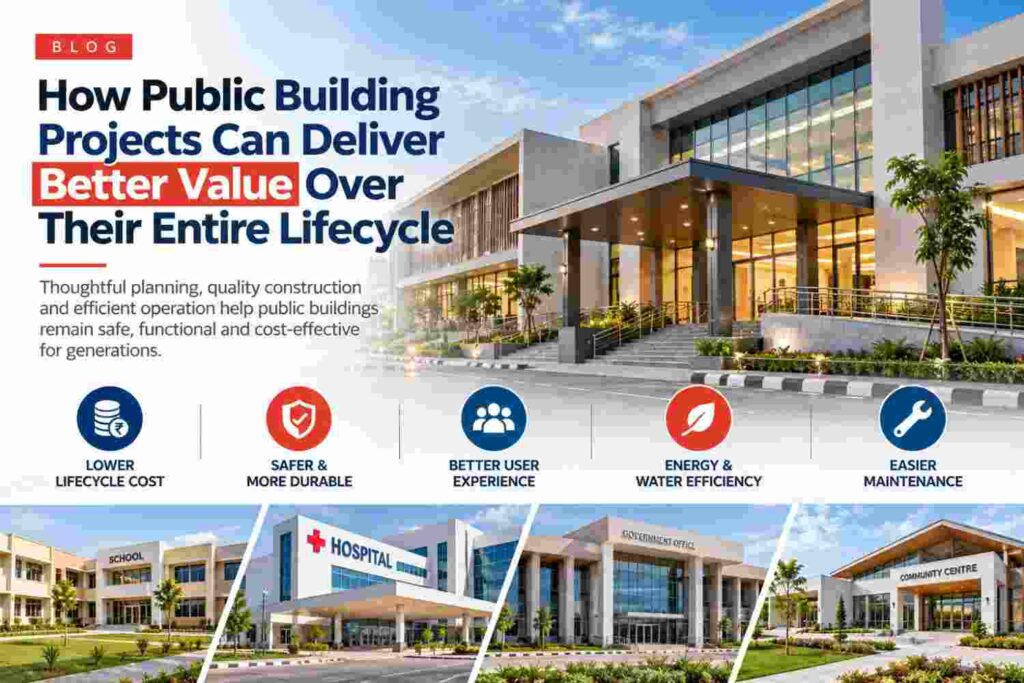
A public building is expected to serve its users for many years. Schools, hospitals, offices and community facilities must support daily activity, meet safety requirements and remain maintainable within public budgets. The lowest initial construction cost does not always produce the best long-term value. A building that is difficult to maintain, consumes excessive energy or […]
Why Drainage Planning Is Essential for Roads, Cities and Public Infrastructure
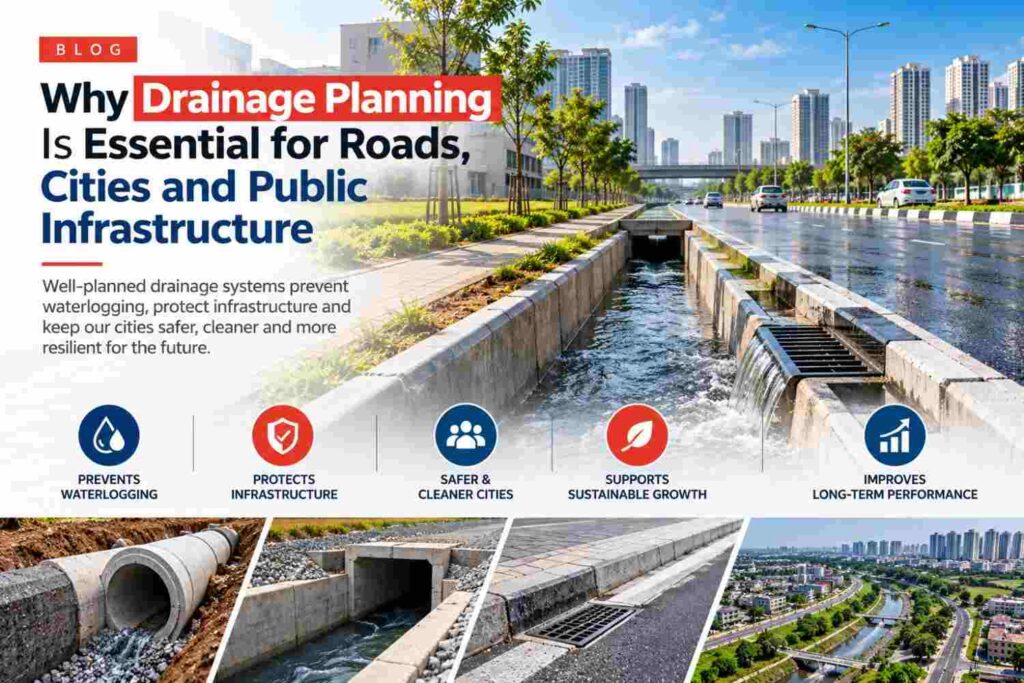
Water is one of the most important factors in infrastructure performance. Repeated waterlogging around roads, public buildings, colonies and industrial areas can disrupt daily life, damage assets and create safety hazards. Drainage should not be treated as a secondary feature added after a road or building has been designed. It is a connected system that […]
A Practical Guide to Government Construction Tenders: What Contractors Should Prepare
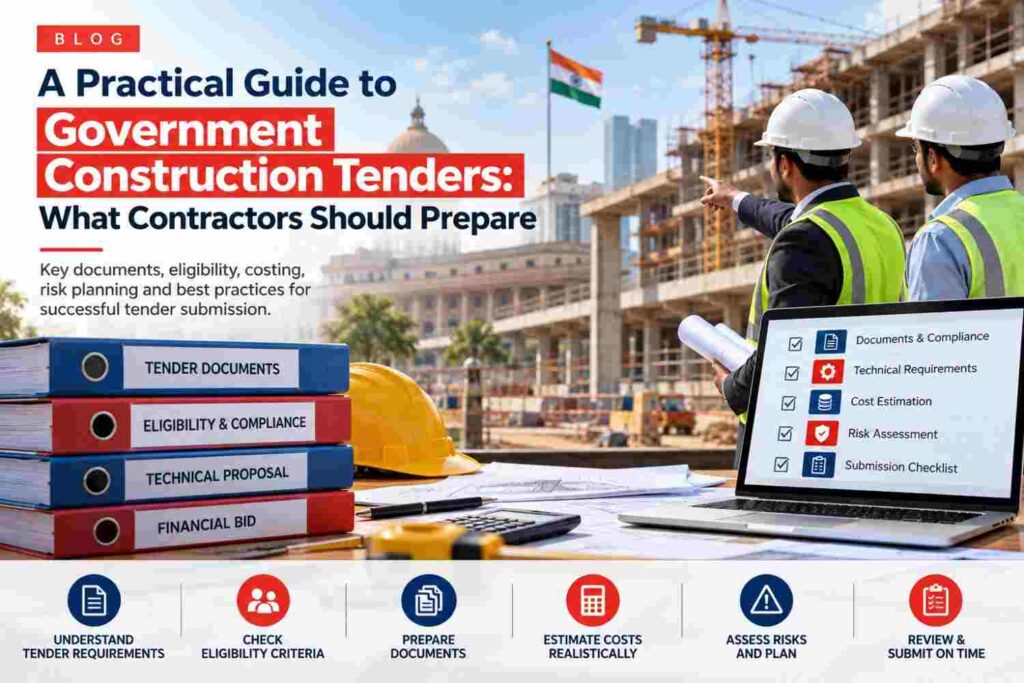
Government construction tenders create opportunities to deliver roads, public buildings, drainage systems, utilities and other essential infrastructure. They also require careful preparation. A tender submission is not simply a price quotation; it is a formal response to a defined scope, eligibility criteria, technical requirements, timeline and contractual conditions. Missing a mandatory document or misunderstanding a […]